Project Background
The ACTIVE PCP project aims to address critical gaps in personal protective equipment (PPE) for first responders facing increasingly complex threats, whether man-made or natural. They operate in hazardous and unpredictable environments, from CBRN-E incidents to natural disasters, where effective protection is critical to ensure their safety, maintain operational readiness, and enable swift responses. Innovations in PPE tailored to these shared needs not only enhance individual safety but also foster interoperability across multi-stakeholder groups during joint operations. However, current PPE limitations expose vulnerabilities that affect responder safety, performance, and morale, ultimately hindering emergency services’ and first responders’ ability to protect people, animals, and property. ACTIVE PCP seeks to leverage innovative procurement methods to stimulate research and development in the private sector, encouraging the creation of cutting-edge PPE solutions tailored to the unique challenges of modern emergency response. Through this approach, the project aspires to set new benchmarks in responder safety, efficiency, and interoperability, ultimately enhancing the resilience of emergency response systems across Europe
Project Objectives
CREATE
detailed set of functional and technical requirements for the procurement of R&D

MATCHMAKING
among suppliers and procurers, as well as external First Responders to address the project technical requirements and needs

LAUNCH
the project Call for Tenders, based on the previous Prior Information Notice (PIN), in line with a sound legal and ethical innovation procurement framework

EVALUATE
the solutions developed in the different PCP Phases, including System Architecture, Prototype and Pilot activities

MOBILISE
First Responders Services, researchers, and experts to build synergies aimed at developing advanced PPE solutions, leveraging existing networks for knowledge exchange and innovation.
RAISE
awareness on the PCP actions & project outcomes through continuous and multiple channels and communication means targeting practitioners and R&D providers all over Europe.

Project Facts
Duration
11/2025 to 10/2028
Programme
Horizon EUROPE
HORIZON-CL3-2024-SSRI-01
Pre-Commercial Procurement
Reference
101226110
Consortium
SYNYO GmbH
KENTRO MELETON ASFALEIAS
CORVERS GREECE MONOPROSOPI I.K.E.
(AE) CORVERS PROCUREMENT SERVICES BV
(AE) CORVERS IBERIA SL
HELLENIC POLICE
PRIESGAISRINES APSAUGOS IR GELBEJIMO DEPARTAMENTAS PRIE VIDAUS REIKALU MINISTERIJOS
STADT DORTMUND
PYROSVESTIKI YPIRESIA KYPROU*FIRE
SERVICE OF CYPRUS
(AE) TREASURY OF THE REPUBLIC OF CYPRUS
Coordinator Contact
Web: www.synyo.com
Email: office@activepcp.eu
Project Methodology
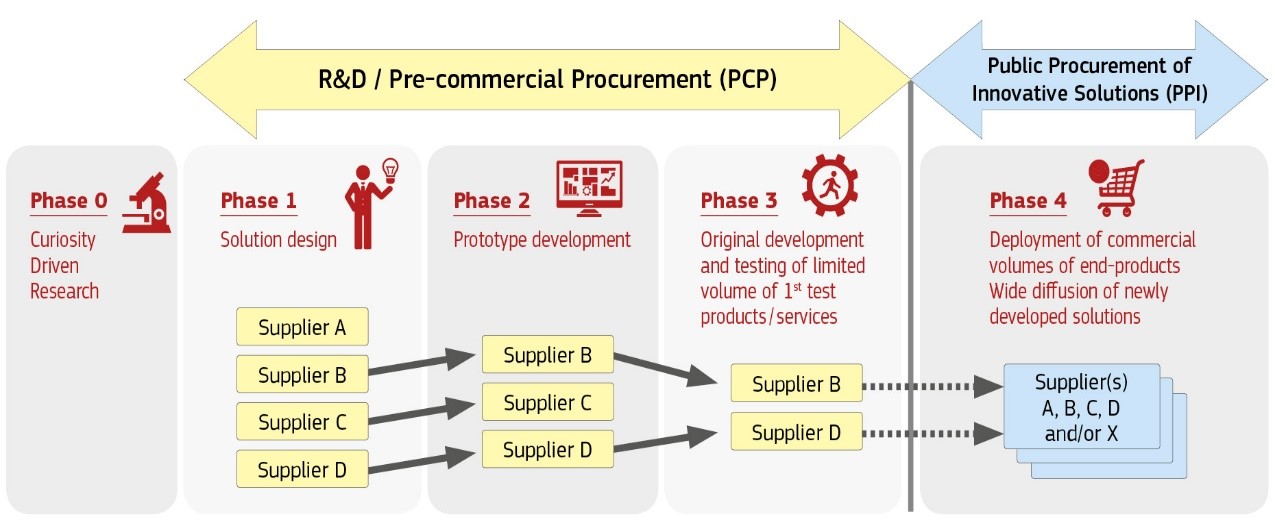
ACTIVE PCP follows the stages of the PCP process as set-out by the European Commission, i.e. work will be divided into four subsequent phases:
Phase 0
Preparation phase (8 months) and Call for Tenders (4 months)
Phase I
Concept design, solution architecture and technical specifications (4 months)
Phase II
Development of prototype systems in two iterations (10 months)
Phase III
Development and testing of pilot systems (7 months)
In parallel to these phases, separate work strands for co-design, evaluation & impact assessment, dissemination and project management will support the project objectives.
Source: European Commission, 2016.
The methodology follows the six steps highlighted below:
01
PREPARE the tender documents based on the established and validated requirements and prepare a methodology for the evaluation of the prototypes to be developed during the different PCP Phases.
02
CONDUCT the call for tenders for R&D services and facilitate competition for the development of at least 4 pilots from 2 different solution providers which are to be tested and validated in real operational environment at the end of the PCP cycle.
03
LEVERAGE competitive development of prototypes complying with the PCP principles of multistage product innovation lifecycle based on the verification and validation procedures defined.
04
EVALUATE the developed prototypes, extract conclusions and make recommendations for further procurement purposes to EU Member State national authorities.
05
DEFINE a strategy for further innovation uptake of the solutions to consider joint-cross border procurement schemes and exploit synergies with other EU funds.
06
DISSEMINATE the project activities and outcomes through continuous and multiple channels and communication means.
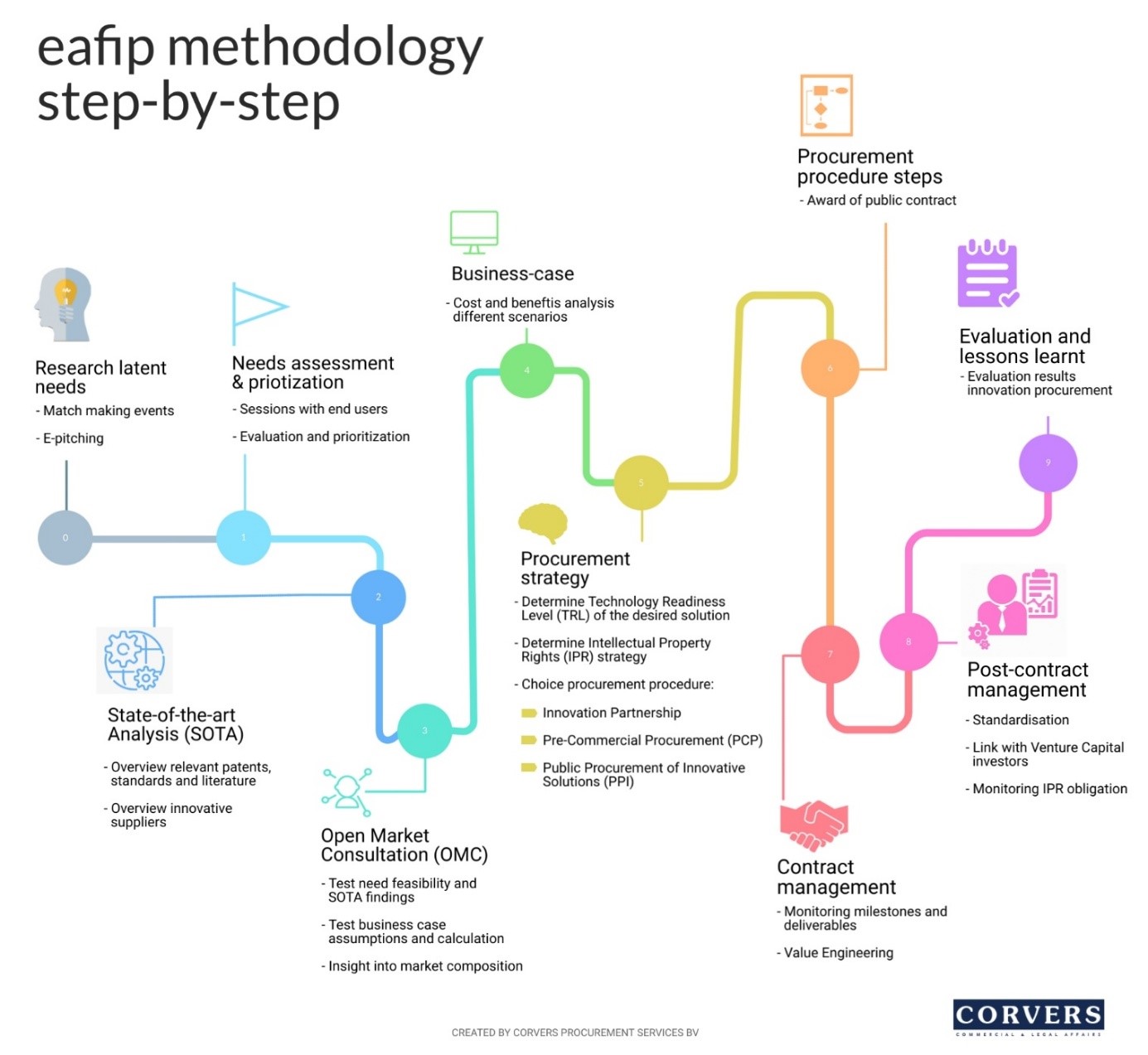
The project follows the EAFIP methodology for the implementation of innovation procurement process
Project Impacts
Impact 1:
A more effective and efficient evidence and knowledge-based development of EU civil security capabilities built on a stronger, more systematic and analysis-intensive security research and innovation cycle.
Impact 2:
Enhancing Collaboration Between Demand and Supply Actors Across Sectors to Drive Innovation and Market Alignment
Impact 3:
Driving Industrialisation, Commercialisation, and Deployment of Security Research Outcomes to Strengthen the EU Security Technology Base and Ensure Supply Chain Resilience
Impact 4:
Elevating the EU's Capacity to Develop, Validate, and Scale Innovative Civil Security Technologies